Showing posts with label my reflections. Show all posts
Showing posts with label my reflections. Show all posts
Saturday, June 18, 2011
The Resurrection of the Body II
The Resurrection of the Body signifies the eventual and everlasting adornment of the soul - as a Divine bequest in a restored and consummated creation - with an outward, symbolic and imaginal manifestation of it's particular inward and immaterial beauties, both as a center of awareness and action via spiritualized senses and "physicality", and as a focus for the awareness, admiration and love of other beings.


Wednesday, June 15, 2011
The Resurrection of the Body
The resurrection of the body is God's victory over the limitations, accidents and distortions of individuality; a victory which, at the same time, preserves individuality intact as something willed and precious. It is the Divine affirmation that the specific, relative and temporal has been created an eternally valid (though by no means static) revelation of a modality or aspect of the Universal, Absolute and Eternal, and constitutes, as it were, a unique entrance to relationship with the Divine.
Saturday, September 25, 2010
Christianity and Violence

Here's a question: is non-violence a moral imperative for Christians? By violence, for the purposes of this inquiry, I mean the use of destructive force, not merely rough treatment.
I take it as a premiss that the Christian will admit, in light of the revelation of God in Christ Crucified, that each human being is granted an infinite value, in light of which the deliberate destruction of human life is, under any circumstances, to be avoided as of all crimes the most heinous.
Yet I believe the answer to our question must be no. First of all, no one can deprive a person of the right to defend his own life, or the life of another, when it is under immediate attack. If there are any natural rights at all, the right to life must be the most fundamental. As for the aggressor's right, he himself has imperiled it for the moment by willfully placing life in jeopardy. This does not mean that a Christian may not choose to insist upon his right. But this raises another question. What is the Christian's duty with regard to protecting the life of another, particularly if that other is less capable of self-defense?
Much here will depend upon the intent of the other. If such a person has a clear, stated intention to become a voluntary victim of violence as part of a strategy of combatting injustice, then one would be absolved of the duty of forceful intervention. I cannot escape the conviction however, that one would be duty bound in any other case to intervene, with force if necessary. Otherwise one would become an accessory in the act of the aggressor, and through cowardice, his moral equivalent. This is particularly true when the target of violence is a child or any other person who, by reason of immaturity or helplessness, is ill-equipped to make a choice for self-sacrifice.
Once we admit so much, we are compelled also to admit that participation in a defensive war would not be a violation of moral principle. My view here is that while nothing that is in accord with natural law can be in conflict with Christian practice, yet Christians are called, though not compelled, to follow a higher path, particularly in the case of war, where violence tends always to become indiscriminate and more impenetrable to moral vision. Also, where any alternative to the destruction of human life exists, we are bound to pursue it. Often these alternatives to violence will require more, not less, courage to enact; and all too often we have absolved ourselves of the imperative duty to exercise this courage.
I will be thinking about this more in days to come, but these are my first, sketchy thoughts on the matter.
Saturday, September 18, 2010
Arundhati Roy vs the Invisible Elite

Two things struck me deeply about the interview, posted below, with Arundhati Roy, the Booker Prize winning author of the magnificent novel,The God of Small Things, who parlayed the wealth and fame consequent upon the success of her book into a controversial career as the spokesperson for the countless faceless victims of the globalization of the "free market".
When I first listened to the interview, I could not believe that I had never heard of what is effectively a civil war being waged in "the world's largest democracy", between the so-called Naxalite Maoists and the government backed militias and police. I could not help but wonder if I had been asleep, or had somehow selectively ignored so important a story. I searched the online archives of NPR for references to the Naxalite Maoists. Not one result. I searched the Washington Post archives going back to 1987. Two tangentially relevant stories. And I searched the New York Times archives going back to 1981. Three results, only one of which was a serious, in-depth article; the others were perfunctory reports of ambushes which had killed police. 70,000 paramilitary forces have been deployed by the Indian government to drive the indigenous peoples of India's forests from their land so that mining companies can have access to the trillions of dollars worth of mineral wealth upon which they live, and there has been a near media blackout on the story, at least in the United States. If this does not indicate that corporate controlled media is serving the interests of it's masters by masking their crimes against humanity, whatever could it mean? "Democracies" are using troops to obtain wealth for private industry at the expense of their own citizens (Hmmm....sound familiar? Just substitute "oil" for "mineral wealth") and the media either hides the story, or reframes it as a tale of patriotic triumph and determination, suitable for flag-waving. It all depends on the market, whether the audience receives the stimulant or the depressant.
Most devastating to me was Roy's critique of non-violent resistance, all the more devastating because I want to believe in it's efficacy. What do you do when your isolated village is surrounded in the night by paramilitaries? Do you let your children be slaughtered? Do you stage a hunger strike? A boycott? There is a fiendish logic, too perfect to be coincidental, in the tactics used by the forces of globalization and progress. They are the ones who have perceived most deeply, and have exploited the fact that non-violent resistance relies for it's power on an appeal to the conscience of the broader civilization. If no one is looking, it doesn't work. That leaves only the recourse to violence, and violence can then be labelled "terrorism", "marxism", or whatever other term will serve to justify a disproportionate and crushingly violent response by the defenders of our freedoms.
Corporate control and manipulation of information insures that the greatest threat to the hegemony of the market, non-violent resistance and the appeal to conscience, will not work. What are the remaining options for the hapless human obstacles to further corporate enrichment? Passive compliance with the destruction of their cultures, or armed rebellion, either of which will suit the invisible elite to a tee.
Monday, July 12, 2010
Crime and Punishment
I recently finished reading Dostoyevsky's novel, Crime and Punishment, and have been pondering the similarities and differences between the characters of Sonya and Raskolnikov. Raskolnikov, a desperately impoverished university drop-out living in St. Petersburg in 1865, has developed a theory, based on historical observation, that the man of genius, the superior man, in view of his potential for becoming a benefactor to humanity, may commit murder if to do so will catapult him to the position of power and influence for which he is destined. Consequently, Raskolnikov works out a plan to murder an old pawnbroker and steal her money. He reckons that, with 3000 rubles, he will, as a gifted and promising student of the law, be enabled to commence a career which will benefit thousands, and his one act of evil will be more than compensated for by his future largesse, particularly since the victim of his crime is an avaricious old woman who profits from the wretchedness of the poor. The murder is carried out, but Raskolnikov's scheme goes awry when he is unexpectedly confronted with the pawnbroker's innocent and simple-minded sister, whom he had expected to be away, and is compelled to murder her, as well, to conceal his moments-old crime. He loses his nerve at this point, and flees the scene without even stealing his victim's money. This precipitates a moral crisis which manifests in Raskolnikov as physical and mental breakdown, since he is unable to recognize the moral dimension of his situation.
Sonya is an angelic young woman who becomes Raskolnikov's savior. She is a prostitute who has taken to the street solely to support her destitute stepmother and half-siblings because, otherwise, her father's uncontrollable alcoholism would shortly render them homeless. Like Raskolnikov, Sonya engages in transgressive behavior, in vice, for the purpose of aiding others. However, unlike Raskolnikov, her integrity and purity of spirit remain, for the present, intact. Why?
First of all, let me say that from the point of view of history, of purely natural reason, Raskolnikov's theory is correct. Leaders of nations and great movements cannot exist without murder, usually on a grand scale; and if they do not lose their nerve, and above all, if they succeed, far from being regarded as criminals, they will be revered as national heros. After all, by the death of thousands, millions are benefited. All this depends, however, on the absolute suppression of the supernatural principle of the infinite value of the human person. When this principle is recognized, there can be no more question of sacrificing another's life for the greater good...because nothing can be greater than that which is of infinite value. All purely natural scales of valuation and judgement are rendered meaningless. There can be no more question of recognizing "great" men and women apart from the "common herd". Raskolnikov fails, his nerve fails, because his essentially good heart is not as hardened against humanity as is his proud, immature and susceptible mind. It is precisely this conflict between mind and heart, exacerbated by extreme poverty, which plunges Raskolnikov into illness and near-madness, and which serves as the central conflict of the novel.
While Raskolnikov consciously holds to the natural ethic of human worth and the will-to-power described above, and is therefore motivated by a desire for self-aggrandizement, Sonya's descent into vice has no ulterior motives and no stimulus of pride. It is her humility, her Christlike willingness to suffer for others, and her concomitant sensitivity to the suffering of others, which preserves her spiritual virginity - if one may use the phrase - intact. She is the one who is able to make Raskolnikov understand that he is loved in spite of his crime and failure, and consequently to understand, finally, the true nature of his crime, whereupon repentance and healing become possible.
Sonya is an angelic young woman who becomes Raskolnikov's savior. She is a prostitute who has taken to the street solely to support her destitute stepmother and half-siblings because, otherwise, her father's uncontrollable alcoholism would shortly render them homeless. Like Raskolnikov, Sonya engages in transgressive behavior, in vice, for the purpose of aiding others. However, unlike Raskolnikov, her integrity and purity of spirit remain, for the present, intact. Why?
First of all, let me say that from the point of view of history, of purely natural reason, Raskolnikov's theory is correct. Leaders of nations and great movements cannot exist without murder, usually on a grand scale; and if they do not lose their nerve, and above all, if they succeed, far from being regarded as criminals, they will be revered as national heros. After all, by the death of thousands, millions are benefited. All this depends, however, on the absolute suppression of the supernatural principle of the infinite value of the human person. When this principle is recognized, there can be no more question of sacrificing another's life for the greater good...because nothing can be greater than that which is of infinite value. All purely natural scales of valuation and judgement are rendered meaningless. There can be no more question of recognizing "great" men and women apart from the "common herd". Raskolnikov fails, his nerve fails, because his essentially good heart is not as hardened against humanity as is his proud, immature and susceptible mind. It is precisely this conflict between mind and heart, exacerbated by extreme poverty, which plunges Raskolnikov into illness and near-madness, and which serves as the central conflict of the novel.
While Raskolnikov consciously holds to the natural ethic of human worth and the will-to-power described above, and is therefore motivated by a desire for self-aggrandizement, Sonya's descent into vice has no ulterior motives and no stimulus of pride. It is her humility, her Christlike willingness to suffer for others, and her concomitant sensitivity to the suffering of others, which preserves her spiritual virginity - if one may use the phrase - intact. She is the one who is able to make Raskolnikov understand that he is loved in spite of his crime and failure, and consequently to understand, finally, the true nature of his crime, whereupon repentance and healing become possible.
Wednesday, July 7, 2010
Rembrandt's "The Blinding of Samson".
 What can one add to this masterful production of Rembrandt's genius? Listening to Bly's poem while contemplating this great painting is an interesting experience. I think there is some validity in Bly's insight that Samson is a solar figure, especially if one considers that the sun is a symbol of full, Divine, consciousness. In that context - thinking of Bly's marvelous poem - the men who are coming to blind Samson represent those persons and forces which have an interest in destroying, obscuring and veiling consciousness in our world, because the accomplishment of their desire requires that destruction.
In Rembrandt's picture, Samson is wrestled to the floor of a tent which looks, for all the world, like a cave. There is a blaze of intense light at samson's feet, outside the cave, while inside all is increasing darkness. Is the tent Plato's cave bereft of light? Is Samson the judge - the philosopher, the lover of wisdom - who has been seduced into believing that the ephemeral world of the senses is the real world, and has thus been blinded to the realm of divine ideas?
Saturday, July 3, 2010
Good America, Bad America
 I have a theory that each model of government requires of it's adherents an attitude which correlates with it's essential nature in order for it to operate at an optimum level. For instance, a genuine monarchy, an essentially conservative form of government, cannot function beautifully unless the majority of subjects at every socio-economic level are conservative in the most salutary sense of the word. Likewise, a democracy, because it is a fundamentally liberal form of government, cannot achieve it's full potential until the majority of it's citizens are truly liberal. Where government is concerned, the highest form is that which makes the people as a whole most contented, most creative and most virtuous. I think it would be quite possible to make a convincing argument for the soundness of both monarchy and democracy on the basis of that criterion.
The problem with America is that a slender but perennial majority of it's citizens labor under the burden of being forced to endure the rule of a liberal form of government while clinging to more or less conservative convictions. They are therefore constantly attempting to wrench American polity away from it's liberal constitutional foundations in order to tell everyone what to do and think, in accordance with their understanding of traditional values. Yet, at the same time, their patriotism (a profoundly conservative virtue) compels them to pay homage to the very constitution that undercuts their most cherished political inclinations. That is a formula for crazy, and it works! This is why we have a huge chunk of fundamentalist, yokel citizenry which hates and mistrusts it's duly elected government, yet considers itself fiercely patriotic. They have homes full of firearms against the day they will have to do battle against their overbearing, socialist leaders; yet they are ready to kill and die at the drop of a hat whenever those same leaders tell them to. This is why American democracy is so very slow to progress, and so very slow to outgrow it's vices, the foremost of which is war: a huge group of Americans who hate America need to prove they love America by continuously inventing and destroying her enemies. Even domestic policy initiatives are dubbed "wars" by their promoters: the "war on drugs", for example.
This is depressing for liberals like myself. But in the interests of balance, positive thinking, and Independence Day, here is a list of the 25 people and things which reveal to me personally, in one way or another and in no particular order of precedence, the distinctive beauty and quirky sublimity of the American Spirit. (There are so many more, of course. What's on your list?)
1. Walt Whitman
2. Jazz and Blues
3. Baseball
4. Bob Dylan
5. Bruce Springsteen
6. Martin Luther King Jr.
7. Joan Baez
8. Johnny Cash
9. Emily Dickinson
10. John Muir
11. Thomas Merton
12. Bluegrass
13. Rock'n'Roll and Folk-Rock
14. Diners
15. The National Parks
16. Clint Eastwood (That's what I said!)
17. Sinatra
18. Comic Books and Cartoons
19. Billy Holiday
20. Duke Ellington
21. NYC (The quintessential American melting-pot)
22. Buffy the Vampire Slayer (I just had to stick that in!)
23. Katherine Jefferts Schori (Yeah, I really think so!)
24. Woodstock
25. The Beats
So Happy Birthday, America! Please try to behave.
Monday, June 28, 2010
Contemplative Prayer 2
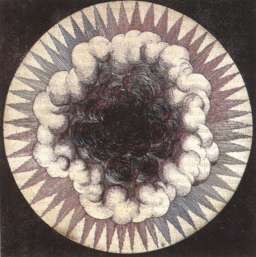
Why sit silently? Why set aside precious time - time that might be more usefully spent performing works of mercy for a suffering world - in order quietly to surrender one's heart to God? Is it mere narcissism? Are we simply seeking spiritual experience for our personal gratification, or indulging in a self-centered spiritual therapy?
The answer lies in the biblical notion that humanity is one body, and that what one does, even in the secret recesses of one's own heart, has an effect upon all. Furthermore, the ancients considered that the human being is a microcosm - a recapitulation in miniature of the entire universe - and that alterations in human consciousness therefor have effects in the "external" world. In short, contemplative prayer is a hidden ministry performed on behalf of the entire creation because it is a means of inner healing. "Acquire a peaceful spirit", says St. Seraphim of Sarov, "and around you thousands will be saved."
The anonymous author of The Cloud of Unknowing, the fourteenth century classic on the art of contemplative prayer, says this to his young pupil: "This is the work of the soul that most pleaseth God. All saints and angels have joy of this work, and hasten them to help it in all their might…All men living in earth be wonderfully holpen of this work, thou wottest not how."
It can be a terrible stretch for the imagination of the modern, rationalizing Christian to conceive that the joy of the blessed in heaven might be increased, and all people living on earth mysteriously helped by God through the simple interior act of lifting our hearts secretly and continually to the Divine Presence; that God might will, through the surrendered and silent hearts of contemplatives, to bless every creature in heaven and earth. But there are deeper modes of apprehension than reason. Consider if this idea does not resonate in your heart. If it does, God may be calling you to this work.
Saturday, June 26, 2010
Contemplative Prayer
 One of the risks of intimacy with God is the confrontation with our own moral and ontological frailty; the poverty and helplessness of the fallen self. Acceptance of that confrontation yields a gradual awakening to the truth that this "self" which struggles to generate moral energy in order to be good, to improve and hopefully merit approbation, is precisely the self which must die so it may become a new creation in Christ.
Contemplative Prayer, insofar as it is a sustained act of self-emptying, self-abandonment and surrender to the Presence of God, is a consent to this death. It is a participation by pure faith in the death and resurrection already accomplished for us by Jesus, and an appropriation of the fruit of the same, namely abundance of life. We can do nothing but die into Christ; but in that death, Christ does everything for us.
Does this sound complex? In truth, contemplative prayer is so simple and easy that the very attempt to explain it gives rise to the fallacy that some technique is involved which must be learned, practiced and perfected. Not so.
Do you remember when, at the Last Supper, St. John rested his head against Jesus' breast? That is all we are doing in this prayer. Sit down quietly. Recollect that the very font and perfection of Love and Beauty is with you; the One Whose love for you is absolutely inextinguishable and eternal. Then simply rest, as it were, against His breast. Goodbye fear, anxiety and self-reliance. What does it matter now if you are "good" or "bad", if you are praying well or poorly? Jesus is doing everything for you.
Saturday, June 19, 2010
A Very Short List

When one is desperately in love with the beauty of the past, one is inclined to complain too much. Therefore, I thought I would, as a remedy, make a list of those social and technological developments (since A.D. 1400 or so) of which I approve, for which I am grateful, the loss of which, I feel, would impoverish my existence dramatically.
1. The increasing openness to the treasures of beauty and truth in the various spiritual traditions of the world.
2. The increasing acceptance of the humanity of those who differ from the dominant group by virtue of race, ethnicity, religion, sex, sexual orientation, gender identity, etc., with a concomitant growth of commitment to extend to all the protections and privileges of equal rights under law.
3. Oil paints. (Were oil paints widely used before 1400? I'm not really sure, but I'm still grateful for what's been done with them since.)
4. The printing press.
5. The technologies involved in the recording and playback of sound and moving pictures. (I must have movies and music!)
6. Refrigeration.
That pretty much covers it. The rest is largely rubbish, or already existed in some form or another prior to 1400. I suppose that in the interests of complete consistency, I ought, in support of numbers five and six, to be grateful for the means of generating and distributing electricity. But then, I am not completely consistent.
Tuesday, June 15, 2010
Tired?

Sometimes it's just tiring being an American. Americans seem to me like a people determined to commit psychic suicide. When you cling to illusions with all your might, it kills something inside you. And when you're killing yourself, it makes it a lot easier to kill other things, too: the livelihood of your employees, for instance, or an ecosystem; even the economic health of the global community. I think part of the reason for the absolutely ferocious brand of patriotism favored by so many Americans is that it helps us to ignore our fundamental unhappiness; and especially, for a nation besotted with its status as #1, to ignore the fact that Western Europeans are consistently ranked as the happiest people in the world. Even though they're "socialists". I guess when the personal ego is shattered, one invests all the angry energy one has left inflating the collective ego as a sort of last defense against non-entity. So please don't waste another breath trying to convince me that the world's fattest nation, the world's biggest market for illegal narcotics, the country with the highest per capita prison population on Earth, enjoys the world's best way of life! We've been perpetually at war for the last 65 years! Our health care system is ranked 39th in the world! Millions of Americans are one illness away from bankruptcy! Nearly every woman I know over the age of forty is on anti-depressants or in therapy, and the men are just too out of touch with their feelings to know they need them, too!
Have you noticed the things people here now do for a living? Do you know, or have you ever known, a little girl or boy who wanted to grow up to become a procurement specialist? Or a customer service representative? How about a communications director? Or a quality control supervisor? An insurance underwriter? (Look at any of the job sites on the internet and you will find page after page of this sort of thing.) No, I would wager my life that there has never been a single child in the history of the planet who dreamed of spending the coveted power and freedom of adulthood on any of these pursuits. And that is because these jobs, at which people spend precious years of their lives, have absolutely no meaning or purpose apart from the capitalist imperative of creating wealth for richest 2% of the population. They are dream-killers, soul-killers. No goods are produced, no craft practiced and mastered, no one edified, enlightened or inspired, no fundamental human need provided for by this sort of work. It is a human rights violation to ask anyone to do it. Digging a ditch would be more satisfying, if a ditch were needed and would benefit one's community.
My question is, why have the churches been standing idly by, in this most religious of nations in the West, as every bit of beauty is drained from our communal life, as culture becomes an elitist museum, as the search for a life of meaning becomes an entirely private affair? The feeble ethic the churches preach has, until very recently, focused almost exclusively on condemning lapses of that docile obedience which both State and Corporate elites count upon to enrich themselves as they deplete us; an obedience completely alien to the figure of Jesus as he is portrayed in the gospels. And how can we accept and cooperate in our own depletion, impoverishment, and dehumanization unless we can be convinced to swallow - hook, line and sinker - the peculiar delusion of the American mind; namely, that we, as the greatest of nations, are forever and inevitably making progress?
Always needing to make progress is tiring. But even more tiring is the effort to maintain the appropriate enthusiasm as we progress over the edge of a precipice.
Monday, June 14, 2010
Bright Star
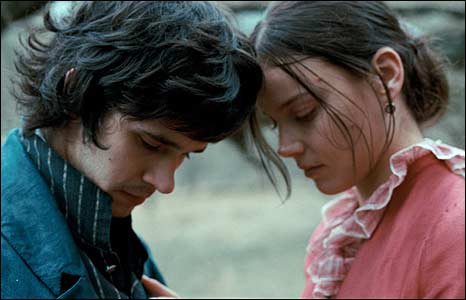
Over the weekend I finally saw Jane Campion's film, Bright Star, about the relationship between the great English poet, John Keats, and his fiance, Fanny Brawne. I wanted to love this movie, because I adore Keats' poetry, and the Romantics and Romanticism in general, and I'm also terribly fond of picturesque period dramas and intense love stories. Yet I came away from Bright Star feeling vaguely disappointed. Let me acknowledge, first of all, that Bright Star is a visual feast. Indeed, there were many things about the film I liked very much. The way it was paced, it's quietness, the lack of obtrusive music, the use of light, color and composition made the film a powerful reflection on a lost way of living and loving, when less was much, much more: small gestures, a touch, a letter, a word meant more and were more deeply felt than is sex itself in our overstimulated age. Though Keats and Fanny never consummated their romance, Campion's portrayal of their whispering, gazing, touching and kissing seemed to me more replete with erotic intensity, more complete, than 90% of Hollywood sex-scenes.
What bothered me about the movie then? Simply that it didn't seem to have anything much to do with John Keats or Fanny Brawne, but rather with two semi-fictional characters bearing the same names. The John Keats in the movie seems to have dropped from the sky, and to be nearly without past, family or friends, except for Charles Brown, portrayed as an odious, boorish bitch of a fellow who is jealous of Keats' relationship with Fanny, and bitterly possessive of Keats' companionship. Within the context of the movie, one couldn't conceive how Keats could voluntarily tolerate the company of such a man, much less his gross discourtesy to Fanny. We learn only through a passing remark that Keats had medical training. We learn in the film of only one of Keats' brothers, and nothing of his sister. We see little of Keats' quick temper, or love of fun. In fact, he seems quite a dull, mooning fellow. Meanwhile Fanny is portrayed as a gorgeously brooding young woman of profound intensity and sincerity, bearing little resemblance to the flirtatious girl whom Keats upbraids in one of his letters for her lack of seriousness.
I couldn't help feeling that Campion was more interested in her own admittedly beautiful vision than in her purported subject. Fortunately, she is an artist of formidable talent, and regarded as a meditation on love and loss in a quieter age, Bright Star is well worth watching.
Friday, June 11, 2010
A Tragedy

The first of the great tragedies to afflict the Christian Church with long term, adverse consequences for Western culture was the stigmatization of the erotic. This arose in part from the too-urgent apocalyptic of the early Church: why bother with marriage and family at a time like this? The world's about to end, you know! Another powerful influence was the anti-incarnational bias of neo-platonism, and of the gnostic mystery religions, which envisioned the liberation of soul from body as the ultimate pre-requisite for union with the divine. And lastly, a persistent failure on the part of Christians to comprehend the radical grace of the Gospel, along with a preference for legalism, moralism and morbid visions of an angry , capricious God, guaranteed that we would continue to be terrified by the scarcely-controllable urges of our instinctual nature.
And what have been the fruits? (By their fruits you shall know them.) Hypocrisy, misogyny, homophobia, repression, self-hatred, shame, broken relationships, forced celibacy, child-abuse, and prudish silence on sexual matters resulting in an ignorance that has had immeasurable hurtful consequences in terms of unwanted pregnancy, disease, and lost opportunity, especially for girls.
Two recent incidents brought this theme to mind. A friend who is a teacher told me of the storm of parental anxiety unleashed when it was discovered that three little boys had been examining one another's penises in the school bathroom. What could be more indicative of the persistence of the puritan impulse, with it's penchant for body-denial, than the fact that American parents, even when thoroughly secularized, cannot accept that children are also sexual beings, with sexual feelings and sexual curiosity? Please don't try to tell me that children don't perceive and internalize this profound parental rejection of their natural impulses, even if they can't verbalize it.
Second, there was stiff resistance, even among the entirely liberal New Englanders who served on the committee, to the inclusion of language on sex education in the Connecticut State Democratic Party Platform, in spite of the fact that we all knew the statistics of the tragic, life-destroying impact of sexual ignorance on the young women in our cities and towns. Why the resistance? We were afraid of conservative outrage; that right-wing Christians would use a plank on sex-education as a stick to beat us with. So let the holocaust continue, rather than disturb the wrathful idol of the religious right!
Why are our children fed a steady diet of graphic violent images, with adult blessing, while images of the body are not considered age-appropriate? Could anything be more perverse? Images which affirm the beauty and goodness of the body and of our sexual nature are prohibited, while images which depict the body's violent destruction are tolerated. Violence is an abomination. God is the author of the body and of sex. God is the ultimate voyeur and enjoyer of all the pleasures and joys he made for us. Maybe, just maybe, we can all simply relax a bit.
Part of the legitimate appeal of The Da Vinci Code phenomenon (terribly written though it was), and of the contemporary fascination with the idea that Jesus and Mary Magdelene may have been married, is that, in the desire to see in Jesus a husband, a lover and a sexual being, many desire also to affirm the goodness of their own sexual natures, and to reconnect human sexuality with it's Divine Source. It's about time.
Wednesday, June 9, 2010
Buffy and the Human Condition

I love the moral complexity of Buffy the Vampire Slayer. It's taken for granted in the ethos of the show that people are going to screw up often, and often seriously. People are going to make terrible decisions. There is going to be friction and loneliness and misunderstanding. Things will be confusing. People are going to betray those they love, are going to want things they shouldn't have. And if we are going to have any friends, lovers, relationships of any sort, we'd better figure out how to deal with it, how to accept one another's brokenness and our own, how to forgive, how to forgive ourselves. The necessity of radical grace is implied.
Something else: in BtVS, we continually are shown that there is common ground between us and our enemies; that just as the "good guys" aren't all that good, so the "bad guys" are never entirely evil, never beyond pity or mercy. We may have to oppose them, but we'd better not assume that they are beyond redemption, or even very different from ourselves. We're all freaks. We all need another chance.
Is that a Christian understanding of our situation? A lot closer than the all-American "gospel" of be-good-so-you-can-go-to-heaven. Truth from the fringes.
Monday, June 7, 2010
The Long Journey
Reader, the journey into God is the longest journey. And yet, of course, we aren't going anywhere, because there isn't anyplace where God is not already present, is not already waiting for us.
I was born and baptized in the Episcopal Church; but when I was still a small child, my parents were converted to a repressive, coercive, quasi-Christian sect which taught that there was only one rather uncomfortable way, and that everyone who chose another was merely fuel for the fire, never mind best intentions. When I returned as a young man to the Church and the faith, it was with a deep spiritual hunger and thirst for God. But my experience left me skeptical that one religion could convey the fullness of divine truth. And my uncertainties and fears made me desperate to discover that truth. I felt compelled, therefore, to travel many byways, to explore all sorts of cramped intellectual alleys, to torment myself with unanswerable questions, often needlessly. Every journey, however, led me back to the person of Jesus, and back to Christian faith.
I had thought, twenty years ago when first I began to keep a disciplined rule of prayer, that a time would come when the answers would be clear, when the path would become level. That has never happened. I still struggle every day for understanding, for fidelity, and every day I meet with confusion.
I do think I can say a couple of helpful words, nevertheless. The first is that no system, no philosophy, no religion can give us all we seek, and if it claims to, then take care! We each have a question for which there is nothing our rational minds would term an answer. Yet the eternal God and the destiny of the whole creation are revealed in the figure of Christ incarnate, crucified and resurrected; and in that figure are answers that run deeper than logic or thought itself.
Second, we are on a path to the cross. There's no escape from that, run where you will. Your only choice is this: will you play the role of the good thief or the bad thief? I mean the ones who were crucified to the left and right of Jesus. If you think you've got a more glamorous part to play, you're kidding yourself. Will you to the very last call upon the God who suffers with you and for you to take you down from your cross, to relieve you of the consequences of your brokenness; or will you cry, "Lord, remember me when you come into your kingdom!"? (Re-member me: put me together again.) When one finally accepts that there is no detour around the road to Golgotha, then the tremendous energy one expends on evasion, escape and denial is liberated, and strangely, the pain of the Cross is eased by the peace which passeth understanding. "Truly I tell you, TODAY you will be with me in paradise."
I was born and baptized in the Episcopal Church; but when I was still a small child, my parents were converted to a repressive, coercive, quasi-Christian sect which taught that there was only one rather uncomfortable way, and that everyone who chose another was merely fuel for the fire, never mind best intentions. When I returned as a young man to the Church and the faith, it was with a deep spiritual hunger and thirst for God. But my experience left me skeptical that one religion could convey the fullness of divine truth. And my uncertainties and fears made me desperate to discover that truth. I felt compelled, therefore, to travel many byways, to explore all sorts of cramped intellectual alleys, to torment myself with unanswerable questions, often needlessly. Every journey, however, led me back to the person of Jesus, and back to Christian faith.
I had thought, twenty years ago when first I began to keep a disciplined rule of prayer, that a time would come when the answers would be clear, when the path would become level. That has never happened. I still struggle every day for understanding, for fidelity, and every day I meet with confusion.
I do think I can say a couple of helpful words, nevertheless. The first is that no system, no philosophy, no religion can give us all we seek, and if it claims to, then take care! We each have a question for which there is nothing our rational minds would term an answer. Yet the eternal God and the destiny of the whole creation are revealed in the figure of Christ incarnate, crucified and resurrected; and in that figure are answers that run deeper than logic or thought itself.
Second, we are on a path to the cross. There's no escape from that, run where you will. Your only choice is this: will you play the role of the good thief or the bad thief? I mean the ones who were crucified to the left and right of Jesus. If you think you've got a more glamorous part to play, you're kidding yourself. Will you to the very last call upon the God who suffers with you and for you to take you down from your cross, to relieve you of the consequences of your brokenness; or will you cry, "Lord, remember me when you come into your kingdom!"? (Re-member me: put me together again.) When one finally accepts that there is no detour around the road to Golgotha, then the tremendous energy one expends on evasion, escape and denial is liberated, and strangely, the pain of the Cross is eased by the peace which passeth understanding. "Truly I tell you, TODAY you will be with me in paradise."
Subscribe to:
Posts (Atom)