One foot in Eden still, I stand
And look across the other land.
The world's great day is growing late,
Yet strange these fields that we have planted
So long with crops of love and hate.
Time's handiworks by time are haunted,
And nothing now can separate
The corn and tares compactly grown.
The armorial weed in stillness bound
About the stalk; these are our own.
Evil and good stand thick around
In fields of charity and sin
Where we shall lead our harvest in.
Yet still from Eden springs the root
As clean as on the starting day.
Time takes the foliage and the fruit
And burns the archetypal leaf
To shapes of terror and of grief
Scattered along the winter way.
But famished field and blackened tree
Bear flowers in Eden never known.
Blossoms of grief and charity
Bloom in these darkened fields alone.
What had Eden ever to say
Of hope and faith and pity and love
Until was buried all its day
And memory found its treasure trove?
Strange blessings never in Paradise
Fall from these beclouded skies.
(One of my absolute favorite poems)
Showing posts with label poetry. Show all posts
Showing posts with label poetry. Show all posts
Monday, July 4, 2011


Sunday, July 3, 2011
SUMMER DAY
Reading in the heat of noon
I grow sleepy, put my head
On my arms and fall asleep.
I forget to close the window
And the warm air blows in
And covers my body with petals.
- by Yuan Mei (1716-1797) translation by Kenneth Rexroth
I grow sleepy, put my head
On my arms and fall asleep.
I forget to close the window
And the warm air blows in
And covers my body with petals.
- by Yuan Mei (1716-1797) translation by Kenneth Rexroth
Three Poems on Sleep
Sonnet XXXIX
Come Sleep! O Sleep, the certain knot of peace,
The baiting place of wit, the balm of woe,
The poor man's wealth, the prisoner's release,
The indifferent judge between the high and low;
With shield of proof, shield me from out the prease
Of those fierce darts Despair at me doth throw;
O make in me those civil wars to cease;
I will good tribute pay, if thou do so.
Take thou of me smooth pillows, sweetest bed,
A chamber deaf to noise and blind of light,
A rosy garland and a weary head:
And if these things, as being thine by right,
Move not thy heavy grace, thou shalt in me,
Livelier than elsewhere, Stella's image see.
- Sir Philip Sidney (1554-1586), from Astrophel and Stella
To Sleep
O SOFT embalmer of the still midnight!
Shutting with careful fingers and benign
Our gloom-pleased eyes, embower'd from the light,
Enshaded in forgetfulness divine;
O soothest Sleep! if so it please thee, close,
In midst of this thine hymn, my willing eyes,
Or wait the amen, ere thy poppy throws
Around my bed its lulling charities;
Then save me, or the passèd day will shine
Upon my pillow, breeding many woes;
Save me from curious conscience, that still lords
Its strength for darkness, burrowing like a mole;
Turn the key deftly in the oilèd wards,
And seal the hushèd casket of my soul.
- John Keats (1795-1821)
Lights Out
I have come to the borders of sleep,
The unfathomable deep
Forest where all must lose
Their way, however straight,
Or winding, soon or late;
They cannot choose.
Many a road and track
That, since the dawn's first crack,
Up to the forest brink,
Deceived the travellers,
Suddenly now blurs,
And in they sink.
Here love ends,
Despair, ambition ends,
All pleasure and all trouble,
Although most sweet or bitter,
Here ends in sleep that is sweeter
Than tasks most noble.
There is not any book
Or face of dearest look
That I would not turn from now
To go into the unknown
I must enter and leave alone
I know not how.
The tall forest towers;
Its cloudy foliage lowers
Ahead, shelf above shelf;
Its silence I hear and obey
That I may lose my way
And myself.
- Edward Thomas (1878-1917)
Come Sleep! O Sleep, the certain knot of peace,
The baiting place of wit, the balm of woe,
The poor man's wealth, the prisoner's release,
The indifferent judge between the high and low;
With shield of proof, shield me from out the prease
Of those fierce darts Despair at me doth throw;
O make in me those civil wars to cease;
I will good tribute pay, if thou do so.
Take thou of me smooth pillows, sweetest bed,
A chamber deaf to noise and blind of light,
A rosy garland and a weary head:
And if these things, as being thine by right,
Move not thy heavy grace, thou shalt in me,
Livelier than elsewhere, Stella's image see.
- Sir Philip Sidney (1554-1586), from Astrophel and Stella
To Sleep
O SOFT embalmer of the still midnight!
Shutting with careful fingers and benign
Our gloom-pleased eyes, embower'd from the light,
Enshaded in forgetfulness divine;
O soothest Sleep! if so it please thee, close,
In midst of this thine hymn, my willing eyes,
Or wait the amen, ere thy poppy throws
Around my bed its lulling charities;
Then save me, or the passèd day will shine
Upon my pillow, breeding many woes;
Save me from curious conscience, that still lords
Its strength for darkness, burrowing like a mole;
Turn the key deftly in the oilèd wards,
And seal the hushèd casket of my soul.
- John Keats (1795-1821)
Lights Out
I have come to the borders of sleep,
The unfathomable deep
Forest where all must lose
Their way, however straight,
Or winding, soon or late;
They cannot choose.
Many a road and track
That, since the dawn's first crack,
Up to the forest brink,
Deceived the travellers,
Suddenly now blurs,
And in they sink.
Here love ends,
Despair, ambition ends,
All pleasure and all trouble,
Although most sweet or bitter,
Here ends in sleep that is sweeter
Than tasks most noble.
There is not any book
Or face of dearest look
That I would not turn from now
To go into the unknown
I must enter and leave alone
I know not how.
The tall forest towers;
Its cloudy foliage lowers
Ahead, shelf above shelf;
Its silence I hear and obey
That I may lose my way
And myself.
- Edward Thomas (1878-1917)
Thursday, June 30, 2011
O MARVEL, by Ibn Arabi
O Marvel! a garden amidst the flames.
My heart has become capable of every form:
it is a pasture for gazelles and a convent for Christian monks,
and a temple for idols and the pilgrim's Kaa'ba,
and the tables of the Torah and the book of the Quran.
I follow the religion of Love: whatever way Love's camels take,
that is my religion and my faith.
ibn al-`Arabi, Tarjuman al-Ashwaq, in The Mystics of Islam, translated by Reynold A Nicholson
My heart has become capable of every form:
it is a pasture for gazelles and a convent for Christian monks,
and a temple for idols and the pilgrim's Kaa'ba,
and the tables of the Torah and the book of the Quran.
I follow the religion of Love: whatever way Love's camels take,
that is my religion and my faith.
ibn al-`Arabi, Tarjuman al-Ashwaq, in The Mystics of Islam, translated by Reynold A Nicholson
Tuesday, June 28, 2011
THE NIGHT, by Henry Vaughan
THROUGH that pure virgin shrine,
That sacred veil drawn o'er Thy glorious noon,
That men might look and live, as glow-worms shine,
And face the moon :
Wise Nicodemus saw such light
As made him know his God by night.
Most blest believer he !
Who in that land of darkness and blind eyes
Thy long-expected healing wings could see
When Thou didst rise !
And, what can never more be done,
Did at midnight speak with the Sun !
O who will tell me, where
He found Thee at that dead and silent hour ?
What hallow'd solitary ground did bear
So rare a flower ;
Within whose sacred leaves did lie
The fulness of the Deity ?
No mercy-seat of gold,
No dead and dusty cherub, nor carv'd stone,
But His own living works did my Lord hold
And lodge alone ;
Where trees and herbs did watch and peep
And wonder, while the Jews did sleep.
Dear Night ! this world's defeat ;
The stop to busy fools ; cares check and curb ;
The day of spirits ; my soul's calm retreat
Which none disturb !
Christ's* progress, and His prayer-time ;
The hours to which high Heaven doth chime.
God's silent, searching flight ;
When my Lord's head is fill'd with dew, and all
His locks are wet with the clear drops of night ;
His still, soft call ;
His knocking-time ; the soul's dumb watch,
When spirits their fair kindred catch.
Were all my loud, evil days
Calm and unhaunted as is thy dark tent,
Whose peace but by some angel's wing or voice
Is seldom rent ;
Then I in Heaven all the long year
Would keep, and never wander here.
But living where the sun
Doth all things wake, and where all mix and tire
Themselves and others, I consent and run
To ev'ry mire ;
And by this world's ill-guiding light,
Err more than I can do by night.
There is in God—some say—
A deep, but dazzling darkness ; as men here
Say it is late and dusky, because they
See not all clear.
O for that Night ! where I in Him
Might live invisible and dim !
That sacred veil drawn o'er Thy glorious noon,
That men might look and live, as glow-worms shine,
And face the moon :
Wise Nicodemus saw such light
As made him know his God by night.
Most blest believer he !
Who in that land of darkness and blind eyes
Thy long-expected healing wings could see
When Thou didst rise !
And, what can never more be done,
Did at midnight speak with the Sun !
O who will tell me, where
He found Thee at that dead and silent hour ?
What hallow'd solitary ground did bear
So rare a flower ;
Within whose sacred leaves did lie
The fulness of the Deity ?
No mercy-seat of gold,
No dead and dusty cherub, nor carv'd stone,
But His own living works did my Lord hold
And lodge alone ;
Where trees and herbs did watch and peep
And wonder, while the Jews did sleep.
Dear Night ! this world's defeat ;
The stop to busy fools ; cares check and curb ;
The day of spirits ; my soul's calm retreat
Which none disturb !
Christ's* progress, and His prayer-time ;
The hours to which high Heaven doth chime.
God's silent, searching flight ;
When my Lord's head is fill'd with dew, and all
His locks are wet with the clear drops of night ;
His still, soft call ;
His knocking-time ; the soul's dumb watch,
When spirits their fair kindred catch.
Were all my loud, evil days
Calm and unhaunted as is thy dark tent,
Whose peace but by some angel's wing or voice
Is seldom rent ;
Then I in Heaven all the long year
Would keep, and never wander here.
But living where the sun
Doth all things wake, and where all mix and tire
Themselves and others, I consent and run
To ev'ry mire ;
And by this world's ill-guiding light,
Err more than I can do by night.
There is in God—some say—
A deep, but dazzling darkness ; as men here
Say it is late and dusky, because they
See not all clear.
O for that Night ! where I in Him
Might live invisible and dim !
Wednesday, June 22, 2011
Prayer (1)
Prayer the Church's banquet, Angels' age,
God's breath in man returning to his birth,
The soul in paraphrase, heart in pilgrimage,
The Christian plummet sounding heav'n and earth;
Engine against th' Almighty, sinners' tower,
Reversed thunder, Christ-side-piercing spear,
The six-days world-transposing in an hour,
A kind of tune, which all things hear and fear;
Softness and peace, and joy, and love, and bliss,
Exalted Manna, gladness of the best,
Heaven in ordinary, man well dressed,
The milky way, the bird of Paradise,
Church-bells beyond the stars heard, the soul's blood,
The land of spices; something understood.
by George Herbert (1593-1633)
God's breath in man returning to his birth,
The soul in paraphrase, heart in pilgrimage,
The Christian plummet sounding heav'n and earth;
Engine against th' Almighty, sinners' tower,
Reversed thunder, Christ-side-piercing spear,
The six-days world-transposing in an hour,
A kind of tune, which all things hear and fear;
Softness and peace, and joy, and love, and bliss,
Exalted Manna, gladness of the best,
Heaven in ordinary, man well dressed,
The milky way, the bird of Paradise,
Church-bells beyond the stars heard, the soul's blood,
The land of spices; something understood.
by George Herbert (1593-1633)
Sunday, June 19, 2011
THE LAMB, by William Blake
Little Lamb, who made thee:
Dost thou know who made thee?
Gave thee life and bid thee feed
By the stream & o'er the mead;
Gave thee clothing of delight,
Softest clothing, wooly, bright;
Gave thee such a tender voice
Making all the vales rejoice?
Little Lamb, who made thee?
Dost thou know who made thee?
Little Lamb, I'll tell thee,
Little Lamb, I'll tell thee:
He is called by thy name,
For he calls himself a Lamb.
He is meek & he is mild;
He became a little child:
I a child & thou a lamb,
We are called by his name
Little Lamb, God bless thee.
Little Lamb, God bless thee.
Dost thou know who made thee?
Gave thee life and bid thee feed
By the stream & o'er the mead;
Gave thee clothing of delight,
Softest clothing, wooly, bright;
Gave thee such a tender voice
Making all the vales rejoice?
Little Lamb, who made thee?
Dost thou know who made thee?
Little Lamb, I'll tell thee,
Little Lamb, I'll tell thee:
He is called by thy name,
For he calls himself a Lamb.
He is meek & he is mild;
He became a little child:
I a child & thou a lamb,
We are called by his name
Little Lamb, God bless thee.
Little Lamb, God bless thee.
Friday, June 17, 2011
I DRINK WINE FROM THE CUP-BEARER
I drink wine from the cup-bearer
At an inn higher than the sky.
Our souls are goblets in His hands,
Deep in His ecstasy we lie.
At our private place of meeting,
Where our hearts are scorched with yearning
Like moths, the Sun and Moon ring
Our candle whose flames are high.
Yunnus, don't tell these words of trance
To those steeped in dark ignorance.
Can't you see how swiftly the chance
Of ignorant men's lives goes by?
- Yunus Emre, 1238-1321 (translated from the Turkish by Talat S. Halman)
At an inn higher than the sky.
Our souls are goblets in His hands,
Deep in His ecstasy we lie.
At our private place of meeting,
Where our hearts are scorched with yearning
Like moths, the Sun and Moon ring
Our candle whose flames are high.
Yunnus, don't tell these words of trance
To those steeped in dark ignorance.
Can't you see how swiftly the chance
Of ignorant men's lives goes by?
- Yunus Emre, 1238-1321 (translated from the Turkish by Talat S. Halman)
Thursday, June 16, 2011
LO FERM VOLER
Firm desire that doth enter
My heart will not be hid by bolts nor nailing
Nor slanderers who loose their arms by lying
And dare not fight with even twigs and switches.
Yea, by some jest, there where no uncle enters
I'll have my joy in garden or in chamber.
I remember oft that chamber
Where, to my loss, I know that no man enters
But leaves me free as would a brother or uncle.
I shake in ev'ry part except my nails
As doth a child, for fear, before the switch
For fear I shall not come into her arms.
- Arnaut Daniel, 12th cent. (translation from the Provencal by Ezra Pound)
My heart will not be hid by bolts nor nailing
Nor slanderers who loose their arms by lying
And dare not fight with even twigs and switches.
Yea, by some jest, there where no uncle enters
I'll have my joy in garden or in chamber.
I remember oft that chamber
Where, to my loss, I know that no man enters
But leaves me free as would a brother or uncle.
I shake in ev'ry part except my nails
As doth a child, for fear, before the switch
For fear I shall not come into her arms.
- Arnaut Daniel, 12th cent. (translation from the Provencal by Ezra Pound)
Wednesday, June 15, 2011
I'VE LATELY BEEN IN GREAT DISTRESS
I've lately been in great distress
over a knight who once was mine,
and I want it known for all eternity
how I loved him to excess.
Now I see I've been betrayed
because I wouldn't sleep with him;
abed or clothed my mind won't rest
to think of the mistake I made.
How I wish just once I could caress
that chevalier with my bare arms,
for he would be in ecstasy
if i'd just let him lean his head against my breast.
I'm sure I'm happier with him
than Blanchaflor with Floris was.
My heart and love I offer him,
my mind, my eyes, my life.
Handsome friend, charming and kind,
when shall I have you in my power?
If only I could lie beside you for an hour
and embrace you lovingly -
know this, that I'd give almost anything
to have you in my husband's place
but only under the condition
that you swear to do my bidding.
- Countess of Dia, born c. 1140 (translation from the French by Meg Bogin)
over a knight who once was mine,
and I want it known for all eternity
how I loved him to excess.
Now I see I've been betrayed
because I wouldn't sleep with him;
abed or clothed my mind won't rest
to think of the mistake I made.
How I wish just once I could caress
that chevalier with my bare arms,
for he would be in ecstasy
if i'd just let him lean his head against my breast.
I'm sure I'm happier with him
than Blanchaflor with Floris was.
My heart and love I offer him,
my mind, my eyes, my life.
Handsome friend, charming and kind,
when shall I have you in my power?
If only I could lie beside you for an hour
and embrace you lovingly -
know this, that I'd give almost anything
to have you in my husband's place
but only under the condition
that you swear to do my bidding.
- Countess of Dia, born c. 1140 (translation from the French by Meg Bogin)
Tuesday, June 14, 2011
NIGHTS OF JASMINE AND THUNDER
Nights of jasmine & thunder,
torn petals,
wind in the tangled kadamba trees-
nothing has changed.
Spring comes again and we've
simply grown older.
In the cane groves of Narmada River
he deflowered my
girlhood before we were
married.
And I grieve for those far-away nights
we played at love
by the water.
- Shilabhattarika, 9th century (translation from the Sanskrit by Andrew Schelling)
torn petals,
wind in the tangled kadamba trees-
nothing has changed.
Spring comes again and we've
simply grown older.
In the cane groves of Narmada River
he deflowered my
girlhood before we were
married.
And I grieve for those far-away nights
we played at love
by the water.
- Shilabhattarika, 9th century (translation from the Sanskrit by Andrew Schelling)
Saturday, March 5, 2011
Thursday, November 25, 2010
Friday, July 16, 2010
ROBERT BLY: Call and Answer
Another thought provoking poem from Robert Bly. It needs to be listened to three or four times.
Friday, July 9, 2010
Carolyn Forche Reads Her Poem, "The Museum Of Stones"
What a stunning beauty is this poem! It brought tears to my eyes.
Tuesday, July 6, 2010
The Blinding of Samson
Bly is the greatest poet I know of still alive and writing in America, and his genius simply increases with age. I think I should really have included him in my list on the previous post. He's better than comic books!
Monday, June 21, 2010
The Lark Ascending - Ralph Vaughan Williams
Summer is here! Beauty and Joy! Be grumpy no more! This music breathes resurrection: sorrow filled with the promise of ecstasy!
Waking or asleep,
Thou of death must deem
Things more true and deep
Than we mortals dream,
Or how could thy notes flow in such a crystal stream?
- P. B. Shelley: To a Skylark
Monday, June 14, 2010
Bright Star
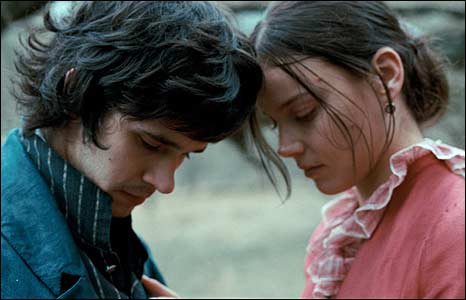
Over the weekend I finally saw Jane Campion's film, Bright Star, about the relationship between the great English poet, John Keats, and his fiance, Fanny Brawne. I wanted to love this movie, because I adore Keats' poetry, and the Romantics and Romanticism in general, and I'm also terribly fond of picturesque period dramas and intense love stories. Yet I came away from Bright Star feeling vaguely disappointed. Let me acknowledge, first of all, that Bright Star is a visual feast. Indeed, there were many things about the film I liked very much. The way it was paced, it's quietness, the lack of obtrusive music, the use of light, color and composition made the film a powerful reflection on a lost way of living and loving, when less was much, much more: small gestures, a touch, a letter, a word meant more and were more deeply felt than is sex itself in our overstimulated age. Though Keats and Fanny never consummated their romance, Campion's portrayal of their whispering, gazing, touching and kissing seemed to me more replete with erotic intensity, more complete, than 90% of Hollywood sex-scenes.
What bothered me about the movie then? Simply that it didn't seem to have anything much to do with John Keats or Fanny Brawne, but rather with two semi-fictional characters bearing the same names. The John Keats in the movie seems to have dropped from the sky, and to be nearly without past, family or friends, except for Charles Brown, portrayed as an odious, boorish bitch of a fellow who is jealous of Keats' relationship with Fanny, and bitterly possessive of Keats' companionship. Within the context of the movie, one couldn't conceive how Keats could voluntarily tolerate the company of such a man, much less his gross discourtesy to Fanny. We learn only through a passing remark that Keats had medical training. We learn in the film of only one of Keats' brothers, and nothing of his sister. We see little of Keats' quick temper, or love of fun. In fact, he seems quite a dull, mooning fellow. Meanwhile Fanny is portrayed as a gorgeously brooding young woman of profound intensity and sincerity, bearing little resemblance to the flirtatious girl whom Keats upbraids in one of his letters for her lack of seriousness.
I couldn't help feeling that Campion was more interested in her own admittedly beautiful vision than in her purported subject. Fortunately, she is an artist of formidable talent, and regarded as a meditation on love and loss in a quieter age, Bright Star is well worth watching.
Subscribe to:
Posts (Atom)